
History
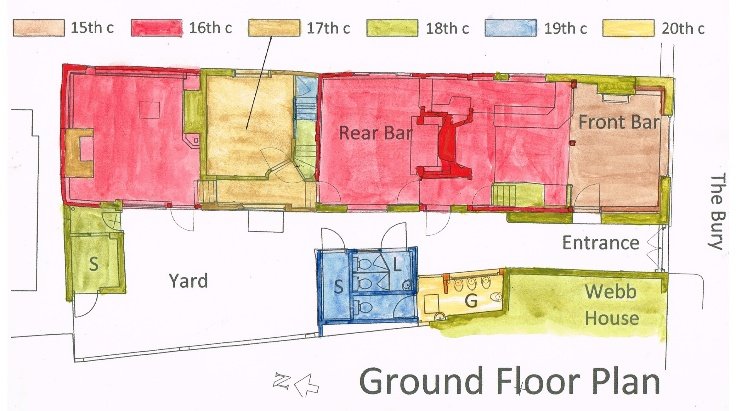
The two-storey building forming The Bell is a post-medieval oak framed structure of a single-bay width and comprising five plus a smoke bay in length.
The story of The Bell starts in the late 15th century, when circa 1490, a single-bay, two storey building was erected facing Odiham church on the southern side of a burgage plot which extended from the Saxon Bury to the new High Street (13th century).
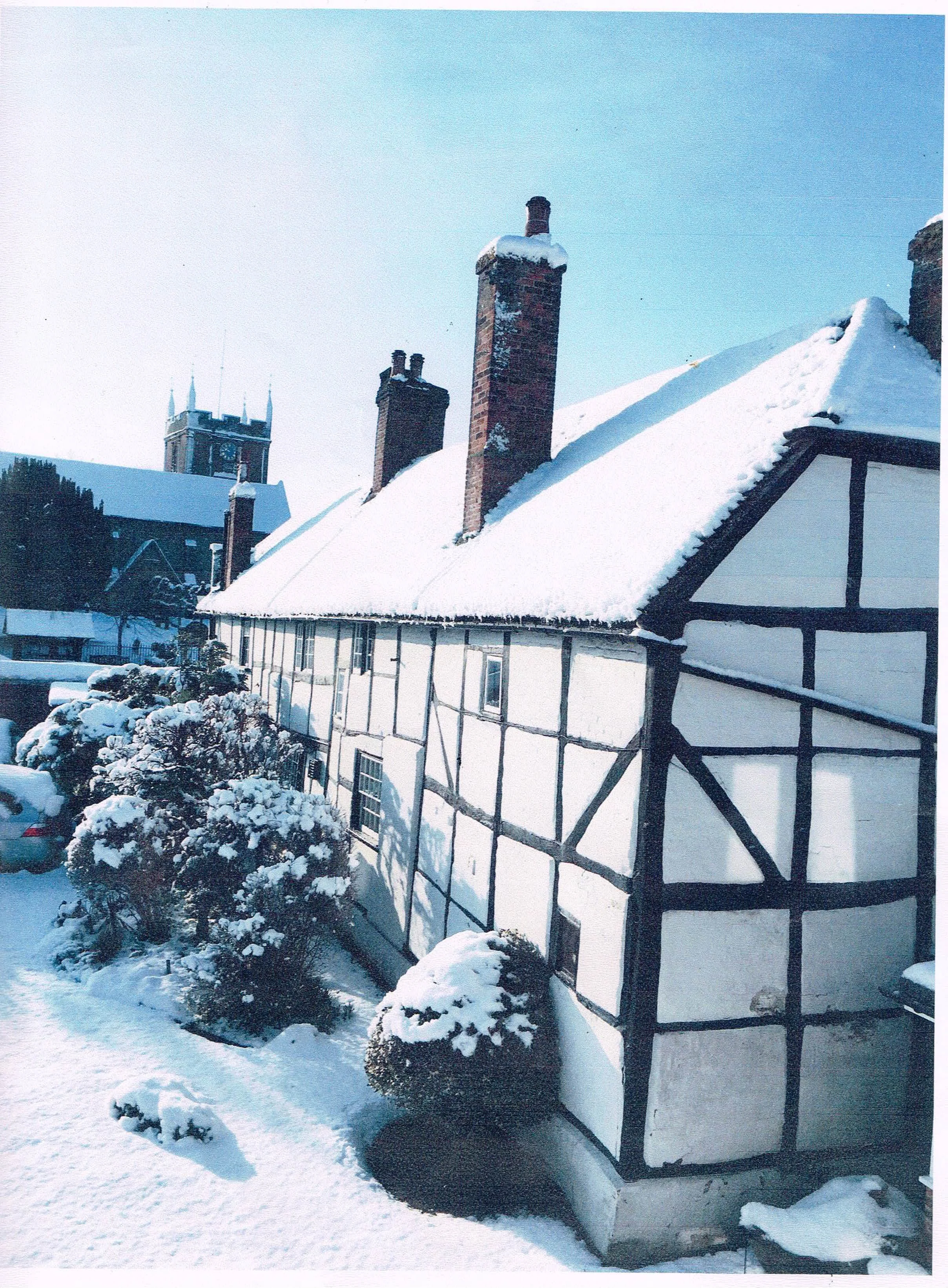
A snowy view of The Bell not usually seen by customers
The High Street was laid out by Royal Surveyors in the 13th century under the original command of King John with the intention of creating a thriving market town to adequately service and provide taxation for his new castle built (1208) at North Warnborough.
The use of the original building is not known, but probably a simple dwelling & trading unit. Whatever, either trade was good or the property passed to a wealthier owner, for early in the 16th century, an almost standard, pattern two and a half bay side-entry cottage was built behind the original building. The substantial central chimney stack may have been built later in the century.
A popular belief is that Jane Bokeley, a resident of The Bury and a local Alewife or Brewster received a Manorial Court License to brew ale in 1509. Was she the wife of The Bells Landlord, or perhaps the Landlord in her own right?
A successful use of the enlarged building as an Alehouse encouraged construction of a separate brewhouse and kitchen built in the late 16th century at the rear of the site and over the well. The premises were probably registered about this time as an Alehouse, following the Alehouse Act of 1551.
The 16th century was the apex of the alehouse and a Royal survey of 1577 recorded in England and Wales some 17,367 such establishments, including presumably The Bell.
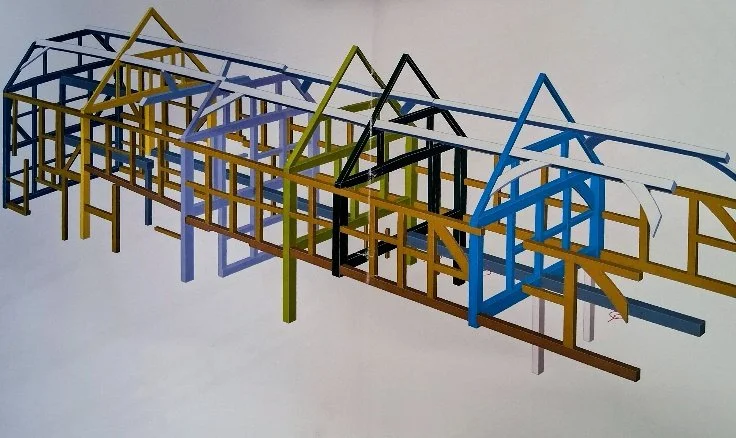
Isometric view of The Bell’s timber framing
Come the 17th century, the space between the cottage building and the brewhouse was infilled with a further extension, completing the long narrow building you see today.
The original toilet and storage outbuilding at the back of the building was erected in the early 18th century. Numerous other alterations were made about this time, including replacement of the front elevation wall (opposite the church) with a Georgian style façade. These works regrettably led to the loss of the front timber frame. Part of these works were construction of the archway over the entrance linking to a small stable and coach building on the site to the West. The front staircase was also relocated and accommodation provided for travellers.
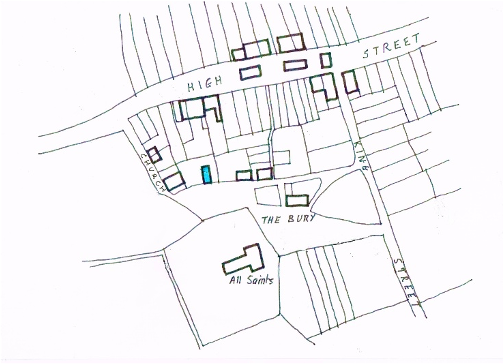
A map showing Odiham’s listed buildings in the mid-16th century - The Bell is shown in blue
The property was purchase by brewer Thomas Lodge and Samuel Hewett in 1769. They demolished the stable block and erected the large adjoining house which was eventually purchased from Mays Brewery by a Reverend Webb in 1881. It is known as Webb House to this day.
There was little change to the building in the 19th century other than construction of a separate washhouse, boiler and toilet block following the passing of the Wine and Beerhouses Act 1869.
There have been many owners of The Bell, most not being the landlord. The earliest records found from 1613-1662 are of William and then John Lewington, owning the two Burgage plots on which stood The Bell and the White Hart Inn in the High Street (circa 1650 – 1961). In 1781 ownership of The Bell passed to Mays Brewery (Thomas and Charles May). The brewery became John May & Co ltd in 1894 which was absorbed into the Reading Brewery of H & G Simmonds Ltd in 1947. In 1960 the owners of The Bell became Courage, Barclay Simmonds & Co Ltd before becoming Courage Ltd in 1970. The Bell was sold to Admiral Inns in 2005.
The Courage brewing Company was established in 1787 and closed down in 2010.
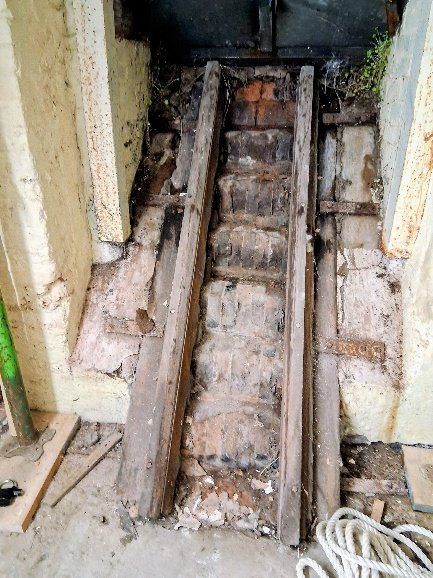
Worn cellar steps and 19th century oak barrel rails
The Bell was closed in March 2020 under the Covid pandemic restrictions. The then Landlords Bob and Sue Porter had run the Pub for some 26 years and prompted by the closure decided to retire. Admiral Inns took the opportunity to sell the property to Iconic Europe Ltd who created in 2021 a new holding company of Odiham Bell Ltd.
Also in 2021, Odiham campaigners and the Parish Council made a successful application for the registration of the property as an Asset of Community Value. Odiham Bell Ltd submitted numerous applications to redevelop the property as housing units.
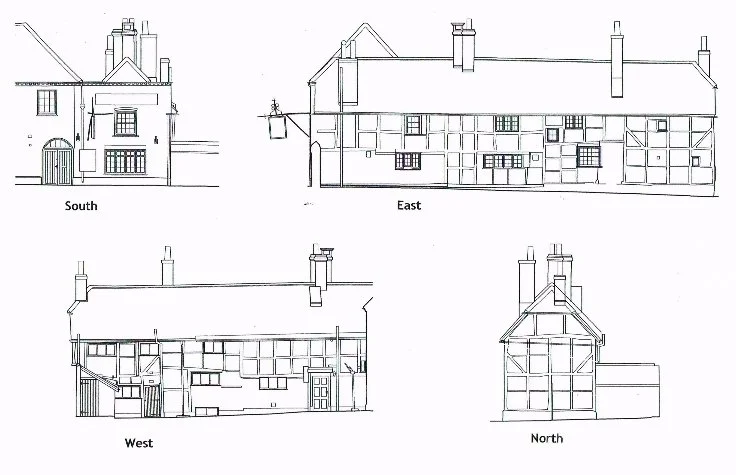
Architectural elevations of The Bell